
 Maybe you used to run, but your knees don’t like it anymore. Maybe you played tennis for years until your shoulder started complaining. Or maybe exercise was never a big part of your life in the first place.
Regardless, getting older doesn’t mean your physical world has to keep getting smaller.
Are you ready for a “fitness reinvention” yet? Maybe you want to get back to exercise, or maybe you want to make your first start.
Either way, we are here to help. Aging bodies are changing bodies, so we need changing goals and tactics to stay on top of our health and fitness.
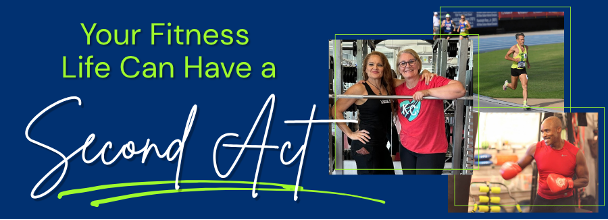
Jill Silva discovered that almost by accident. At 60, the writer had never exercised consistently. Then a friend invited her to a recreation center.
Silva started working out, connected with a powerlifting coach, and became something that shocked her:
“I might never be that skinny young thing again, but that’s OK,” she says. “I’m strong, I feel great, and I won’t need to use a walker when I’m 80.”
The National Senior Games Association says more than half of its athletes returned to a sport or took up a new one in midlife. Some use strength training as the foundation for their new pursuits.
Cheryl and Tom Snowden, for instance, started resistance training. As they grew stronger and more capable, they progressed to indoor and outdoor cycling and eventually trained for the National Senior Games.
Don Phillips started exercising at 56, first walking and then running. Decades later, his fitness life was still evolving. In his 90s, he added more whole-body strength training and took up powerlifting.
And Nate Wilkins completely changed course after a health scare in his 50s. He lost weight, built strength and regained his health. Then he became a trainer and coach himself.
“If I can do this at 64 and feel like this, then I can encourage other people to do it, too,” he says.
You don’t need big or exciting goals. “Feeling better” is a great goal!
Ready for Your Second Act?
Here are some tips to keep in mind:
- Don’t try to be 25 again. Work with the body you have now rather than trying to recreate one from decades ago.
- Build strength. Make muscle the foundation of your fitness program. It will improve everything from sports to carrying groceries.
- Try something new. Keep an open mind. Who knows what you might discover?
- Adapt when you need to. A body ache shouldn’t mean you quit. Talk to us about what kind of activity might be good for you.
- Remember what you’re training for. Nate tells his clients to think about how they want to live. Whatever you want to do, you need strength, balance, stamina and mobility, now and into the future.
Your next chapter might surprise you. Start writing it here with us.
Holly Kouvo is a personal trainer, functional aging specialist, senior fitness specialist, brain health trainer, writer, and speaker.