
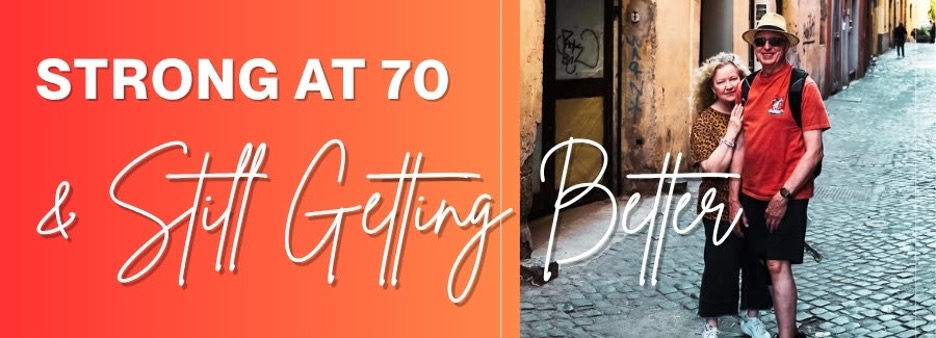
When Kim’s new grandbaby comes to visit, she doesn’t think twice about carrying him up and down the stairs. Between visits, she carries a 15-pound weight on those same stairs — just to stay ready.
That’s the kind of practical, purposeful thinking that defines her approach to fitness at 70.
Since joining a gym with her husband, Rick, 74, last year, Kim has lost 25 pounds and dropped a clothing size. But those numbers aren’t really the point.
“I’m more fit now than I was 10 years ago,” she says. “I want to be as healthy as long as possible.”
Kim’s story is powerful not only on its face, but also because of what it reveals. See if you can relate.
Grandchildren are a top fitness motivator for people over 50. They want to play on the floor, carry a toddler, or hike with older kids. It cuts through more abstract or even medical reasons.
Let’s face it: Nobody wants to be the “boring” gran, right?
Other top motivators include:
- Independence: the ability to drive, travel, or live on their own. Staying strong means staying in control of your own life.
- Avoiding what they’ve seen:They’re determined to age better than parents did.
- Managing a diagnosis. A doctor’s warning about blood pressure, diabetes, etc., can get you moving.
- Travel and adventure. Let’s go! Staying mobile fuels retirement dreams.
- Mental sharpness. Regular exercise protects memory and mental clarity.
The “Use It or Lose It” Moment
Kim and Rick’s commitment to fitness started more than a decade ago, born out of a frank conversation about where they were headed.
“We said, ‘If we don’t do this, we’re going to feel it,’” she recalls. “It was very much a ‘use it or lose it’ moment.”
They knew that muscle mass, balance, and cardiovascular fitness decline with age — but regular exercise can slow or even reverse many of those losses. The key word is regular. Consistency matters more than intensity, especially for older adults.
One of Kim and Rick’s biggest advantages is each other. Training with others helps you stick with it. Accountability partners keep us moving when motivation wanes.
“On the days I don’t want to go, I’m always glad I did,” she says.
It’s human nature to underestimate how good we’ll feel after a workout. Recognizing that gap — between how you feel before and how you’ll feel after — is one of the most reliable tools for getting yourself out the door.
For Kim, fitness is key to staying strong enough to live fully — to carry her grandson, climb the stairs without a second thought, and feel better at 70 than she did at 60.
That’s what fitness is for.
Ready to write your own success story? We’re here to help.
Holly Kouvo is a personal trainer, functional aging specialist, senior fitness specialist, brain health trainer, writer, and speaker.