
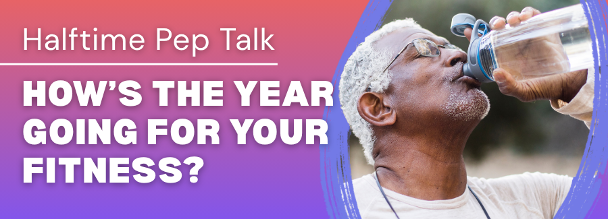
 Six months into the year, a lot of people start grading themselves.
- Did I hit my goals?
- Did I fall off?
- Am I ahead or behind?
Here’s a better way to think about it: this isn’t a report card, it’s halftime.
No coach spends halftime handing out grades. They look at what’s working, adjust what isn’t, and figure out how to play the second half better than the first. That’s it — just a clear-eyed look at the game so far and a plan for what’s next.
Maybe your first half was strong, and you’re looking to build on it.
Maybe it didn’t go the way you hoped, and you’re ready for a real reset.
And maybe you haven’t really started at all. You’ve been meaning to, thinking about it, telling yourself next month would be the moment. If that’s you, halftime works just as well as a season opener. Nobody’s keeping score of when you walked onto the field, only that you did.
Wherever you’re starting from, the only bad move is deciding the game’s already over.
Here’s your halftime adjustment list to get it done in the second half of 2026.
12 Moves for a Stronger Second Half
- Move daily, however that looks. A walk, a dance break, a stretch before bed — consistency beats intensity. The goal is showing up, not a perfect workout.
- Lift something heavy, 2–3 times a week. Strength training after 50 isn’t optional — it’s one of the biggest levers you have for staying strong, mobile, and independent.
- Eat like it matters. More produce and lean protein, less packaged sugar and alcohol. Simple swaps, repeated often, beat any short-term diet.
- Chase fat loss and strength, not just a number on the scale. Body composition tells a truer story about your health than weight alone.
- Protect your sleep. Recovery is where the actual progress happens — not just in the gym.
- Get real support. A trainer, a small-group class, a workout partner — accountability isn’t a crutch, it’s a strategy. Tell them your goals and your limitations so they can actually help.
- Schedule workouts like they’re non-negotiable. Because they are. Put them on the calendar the way you would a doctor’s appointment.
- Get outside. Sunlight, fresh air, and movement in nature do something a treadmill can’t replicate — for your body and your mood.
- Do the thing you’ve been avoiding. You know which one. It’s usually smaller and less scary than the story you’ve built around it.
- Practice gratitude for what your body can still do. Every walk, lift, or hike you’re able to take is worth noticing, not taking for granted.
- Make it fun again. Try a new class, a new sport, a new route. Motivation follows enjoyment more often than it follows discipline.
- Don’t go it alone. Partner up, join a group, or just tell someone what you’re working on. Support is what turns a good first half into a great second one.
Halftime isn’t about beating yourself up over the first six months. It’s about walking into the next six with a clearer plan. Pick two or three of these and start there — the rest can wait.
We’re here whenever you’re ready to talk through what that looks like for you.
Holly Kouvo is a personal trainer, functional aging specialist, senior fitness specialist, brain health trainer, writer, and speaker.