
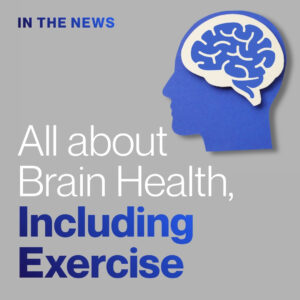
 The New York Times has launched a fascinating, interactive series about brain health on its website. Five days of challenges let you test your knowledge, learn about brain-healthy foods and workouts, play a game, and make five appointments.
“Practicing basic healthy behaviors, like eating nutritious food and getting regular exercise, is the best way to enhance your brain power and protect the longevity of your neurons,” reporter Dana G. Smith says in the video you can also see here on YouTube.
Neurologists “emphasized one thing: exercise,” she says in the short, engaging video. “Research linking exercise and brain health goes back decades and the more we learn, the more impressive results seem to be.”
It helps repair damaged brain cells, grow new neural connections, lower your risk of memory loss and dementia, and so much more, Smith says.
“The most important thing is that you’re challenging your muscles and getting your heart rate up.”
An Idea That Keeps Getting Stronger
The idea that exercise helps the brain isn’t new, but the science behind it keeps getting richer and stronger.
“Exercise is No. 1 when we’re thinking about the biggest bang for your buck,” Dr. Gregg Day, a neurologist at the Mayo Clinic, told The Times.
It’s good for your memory, attention, and decision-making. It gives you a short-term boost and long-term benefits if you do it consistently over time.
Researchers say exercise improves blood flow to the brain, delivering oxygen and nutrients while helping clear away harmful proteins linked to Alzheimer’s disease. Movement also supports brain cell repair and new neural connections.
“All of this is essentially allowing your brain to age more slowly than if you’re physically inactive,” says neuroscientist Kirk Erickson.
The benefits are especially important as we get older. Areas of the brain tied to learning and memory naturally shrink over time, but regular physical activity appears to slow that process.
Keeping It Hopeful and Simple
We’d love you to come and workout with us. But really, there’s no “one size fits all” requirement. Just pick something you like so you’re more likely to keep doing it – whether that’s weightlifting, swimming, dancing, jogging… whatever!
Talk with your healthcare provider. Talk with us. And if you’re thinking about joining a gym, know that you’re not just investing in strength or balance—you’re investing in your brain, too.
Holly Kouvo is a personal trainer, functional aging specialist, senior fitness specialist, brain health trainer, writer, and speaker.